- Home /
- Our Products /
- Wall to Wall Shades
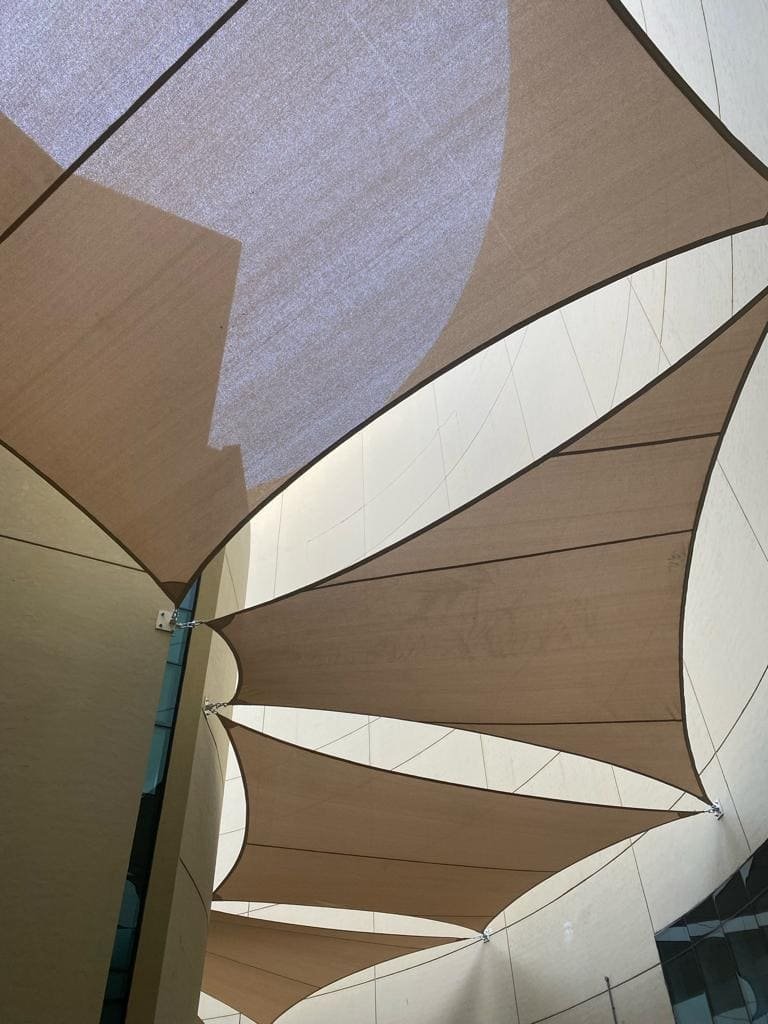
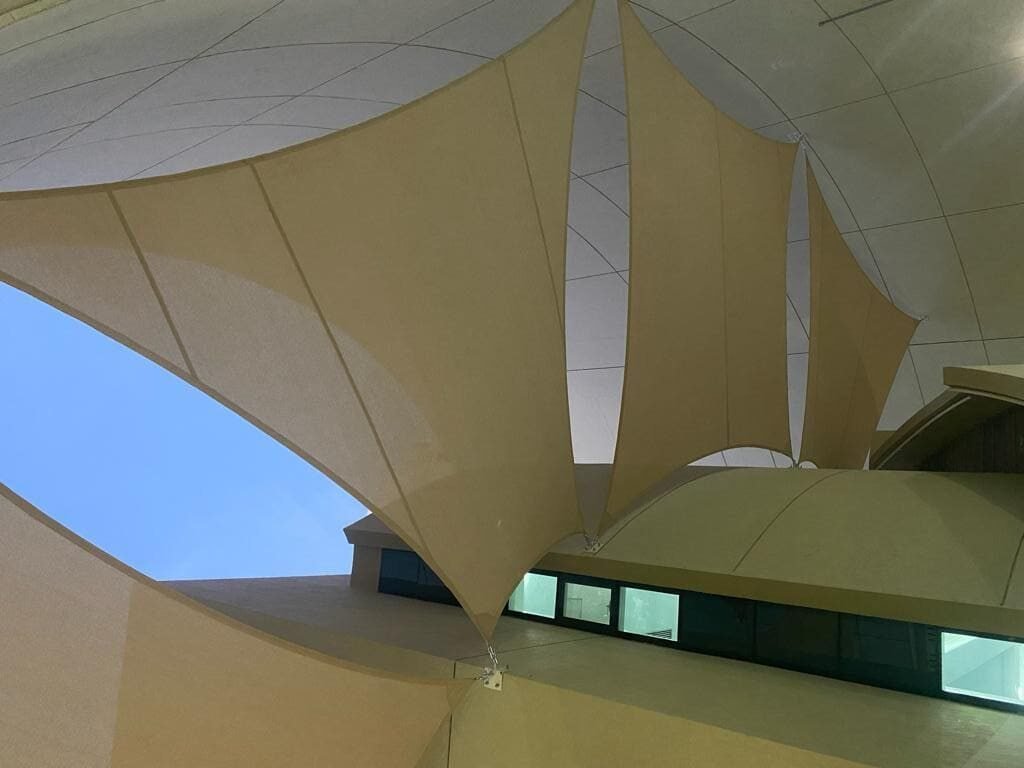
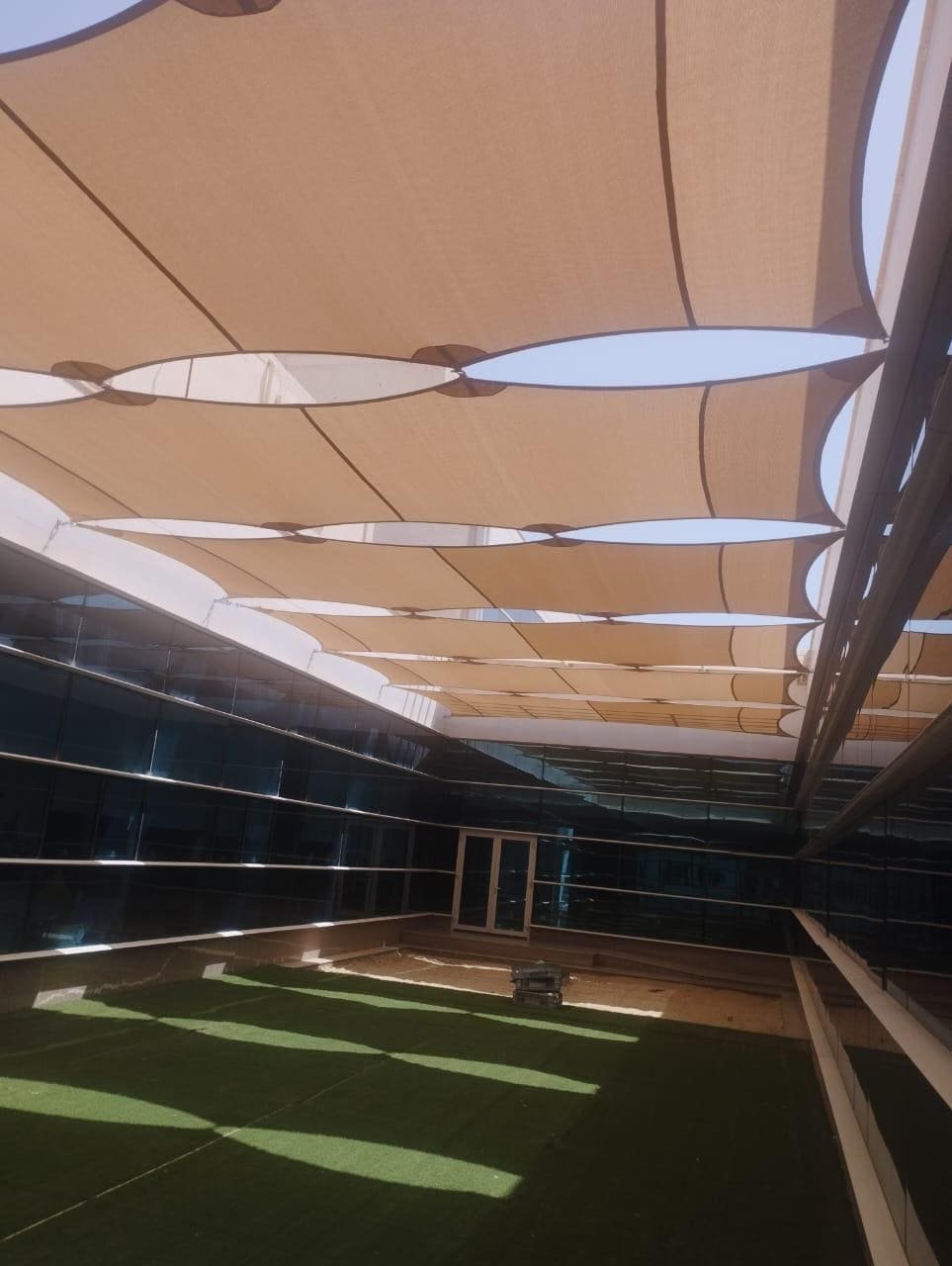
Alfajar Shades designs and installs wall to wall shade structures for gaps between buildings, open courtyards, outdoor corridors and all types of bounded outdoor spaces across Dubai and UAE. Tensile fabric anchored directly between two existing walls, no freestanding posts cutting through your space. HDPE and PVC fabric, all span widths. Free site visit and quotation.
Wall to Wall Shades
Wall to Wall Shades in Dubai & UAE
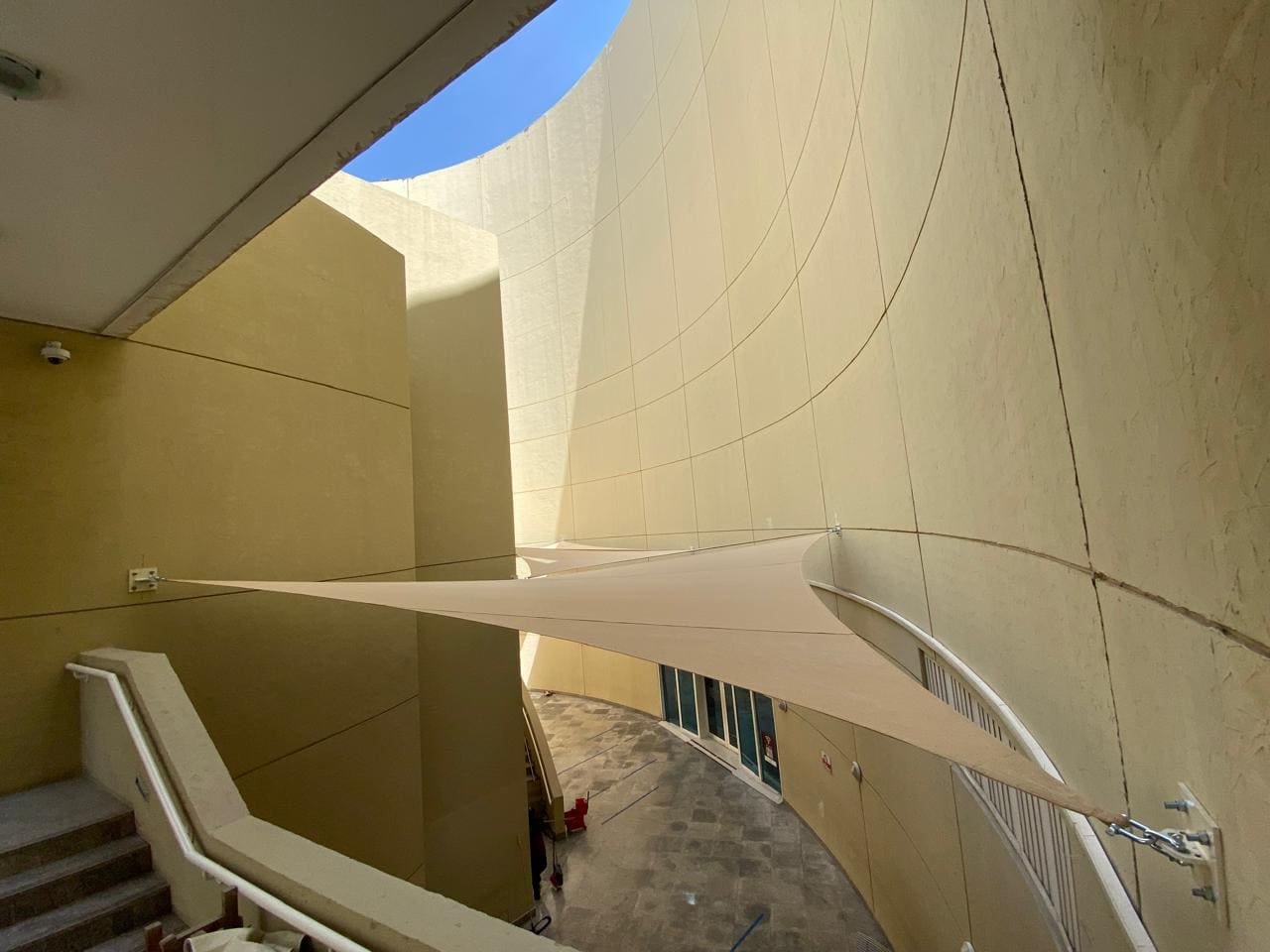
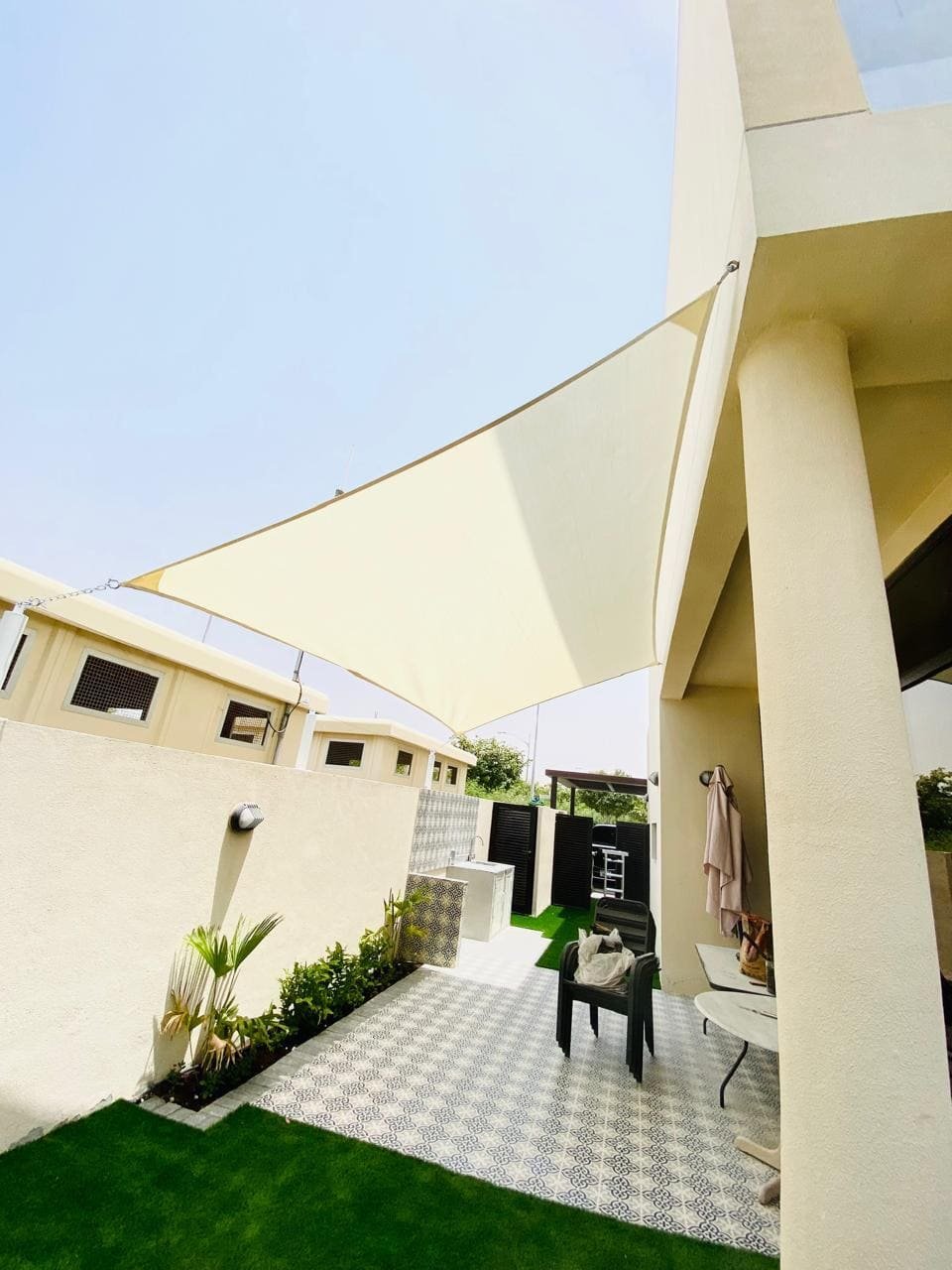
A wall to wall shade structure spans tensile fabric between two existing walls, building facades, parapet edges or structural anchor points — covering the open space between them entirely. There are no freestanding columns in the middle of the shaded area. The result is a clean, obstacle-free space beneath, with all structural elements kept to the perimeter walls where they belong.
This is one of the most versatile shade structures we install across Dubai and UAE. It suits narrow gaps between buildings, open courtyards bounded by perimeter walls, outdoor corridors linking two structures, retail frontage canopies, villa side passages, service areas and any bounded outdoor space where freestanding posts would be impractical, unwanted or simply in the way.
Every wall to wall shade Alfajar Shades installs is engineered from scratch for the specific site. We assess the wall construction, calculate the structural loads, specify the anchor fixing system and design the fabric profile to comply with UAE wind load requirements. The engineering is not optional — it is what protects your walls, your structure and the people below it.
Wall to Wall Shades
Wall to Wall Shade Types We Install
🌊
Tensile Catenary Sail
A curved tensile fabric sail anchored under tension between two walls — the most popular wall to wall configuration across Dubai and UAE. The natural catenary sag distributes load efficiently along both walls. Clean architectural aesthetic with no overhead steel beams visible from below.
🏠
Pitched / Sloped Canopy
Fabric fixed higher on one wall and lower on the opposite wall — allowing rain to drain off one side. Ideal for narrow alleyways, service corridors and covered passages between buildings where water runoff needs to be directed away from the shaded area.
🔲
Flat Horizontal Canopy
A flat fabric panel stretched horizontally between two walls at equal height. Minimal visual profile — best for sheltered locations with limited wind exposure where a clean flat ceiling appearance is more important than drainage or wind performance.
🌀
Barrel Vault
A barrel vault tensile structure arching between two parallel walls. Creates a high central clearance, improves wind resistance and adds strong visual character. Used for hotel passageways, retail arcades and covered outdoor dining corridors across UAE.
🏗️
Steel Beam + Fabric
A lightweight steel beam fixed between the two walls at high level — the fabric canopy then hangs from the beam rather than directly from the wall faces. Used for wider spans over 12–15 metres where direct wall anchor capacity would be exceeded by a pure tensile system.
🪟
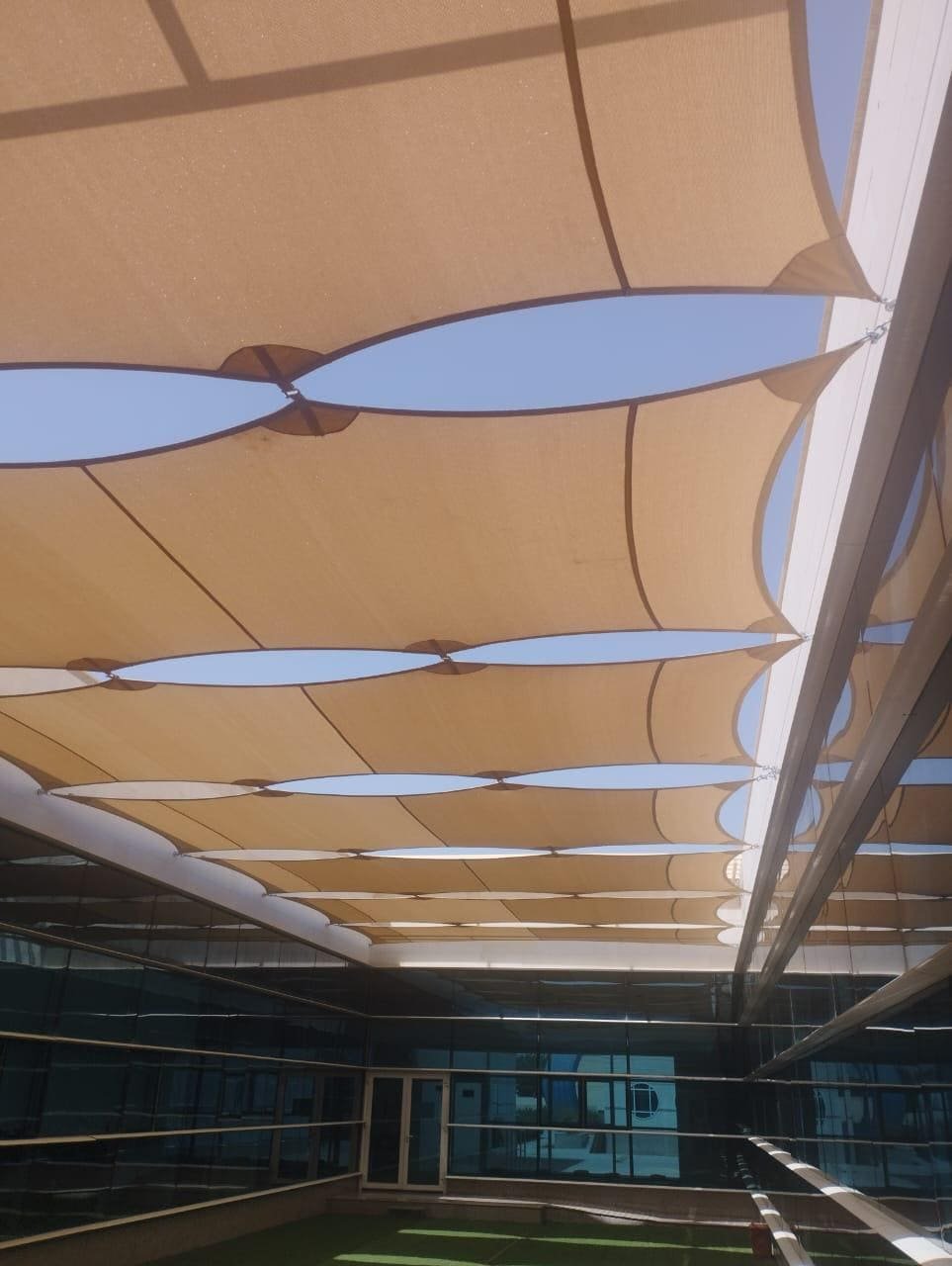
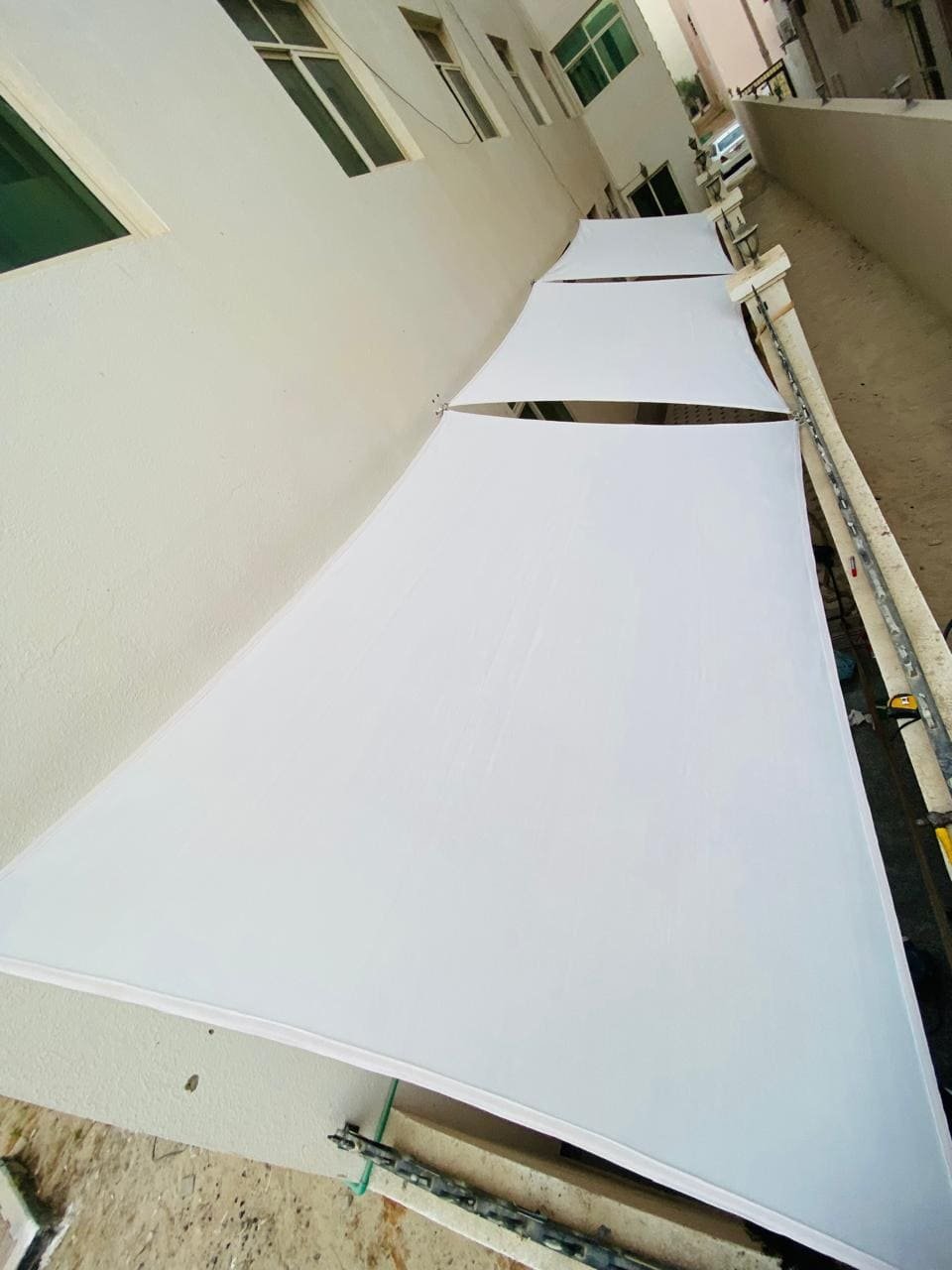
Multi-Bay Sequential Cover
Multiple shade panels installed bay by bay along an extended corridor or long gap between two walls. Each bay is independently tensioned for ease of maintenance and replacement. Used for long retail arcades, warehouse loading zones and extended building connection covers.
- No freestanding posts — fabric fixed directly to existing walls or structures
- Spans from 2 metres up to 25 metres or more depending on wall capacity
- HDPE breathable or PVC fully waterproof fabric — up to 98% UV block
- Anchor loads structurally assessed and certified before installation begins
- Flat, pitched, catenary or barrel vault fabric configurations available
- Custom fabricated to exact dimensions of your space — no standard kits
- Minimal structure visible from below — clean, architectural finish
Frequently Asked Questions
How much does a wall to wall shade cost in Dubai?
Wall to wall shade prices in Dubai depend on the span width, total length, fabric type and the fixing method required once the walls are assessed. Small residential catenary spans typically start from approximately AED 3,000 to AED 8,000. Larger commercial or wider-span installations vary considerably depending on engineering requirements. Alfajar Shades provides a free site visit and a detailed fixed-price quotation — contact us via WhatsApp with your approximate span dimensions for a fast initial estimate.
Will the wall anchors damage my walls?
When properly engineered, wall anchors for a shade structure will not damage your walls. Our structural engineer calculates the exact load each anchor carries and specifies the correct bolt type, diameter and embedment depth so the load remains well within the wall’s capacity. We never install wall anchors without a structural assessment first — this step protects your walls long-term. All holes are core-drilled cleanly and sealed with the appropriate fixing compound.
What is the maximum span a wall to wall shade can cover?
Wall to wall tensile shades can span from 2 metres up to 25 metres or more depending on the fabric type, structural configuration and available anchor capacity in both walls. For spans over 12–15 metres, a steel beam or intermediate cable system is typically introduced to distribute the load more efficiently. Our structural engineer confirms the achievable maximum span for your specific site and wall types during the free site visit.
What if my walls are not strong enough to carry the shade?
If the wall assessment shows that the anchor capacity is insufficient for a direct wall-to-wall system, we have several practical alternatives. A post-adjacent hybrid places a single freestanding post close to the wall — carrying most of the load in the ground anchor rather than the wall surface. A through-wall anchor plate distributes the load across a larger wall cross-section. A lightweight steel beam transfers load more evenly down the wall’s structural line. We always find a workable solution — we just need to see the site first.
Can wall to wall shades withstand UAE wind and sandstorms?
Yes. All our wall to wall shade structures are engineered to UAE peak wind loads — the same standard applied to all our freestanding tensile structures. The anchor specification accounts for peak wind uplift forces on the fabric. HDPE’s breathable open-weave structure naturally reduces wind resistance compared to solid PVC, which is one reason HDPE is often preferred for exposed locations. All anchor bolts are torque-tested on installation to confirm they meet the required pullout resistance before the shade is loaded.
Still Have Questions?
Contact our team directly. We respond within 2 hours during business hours. WhatsApp is the fastest way to reach us.
Our Supplier/Brand Partners